

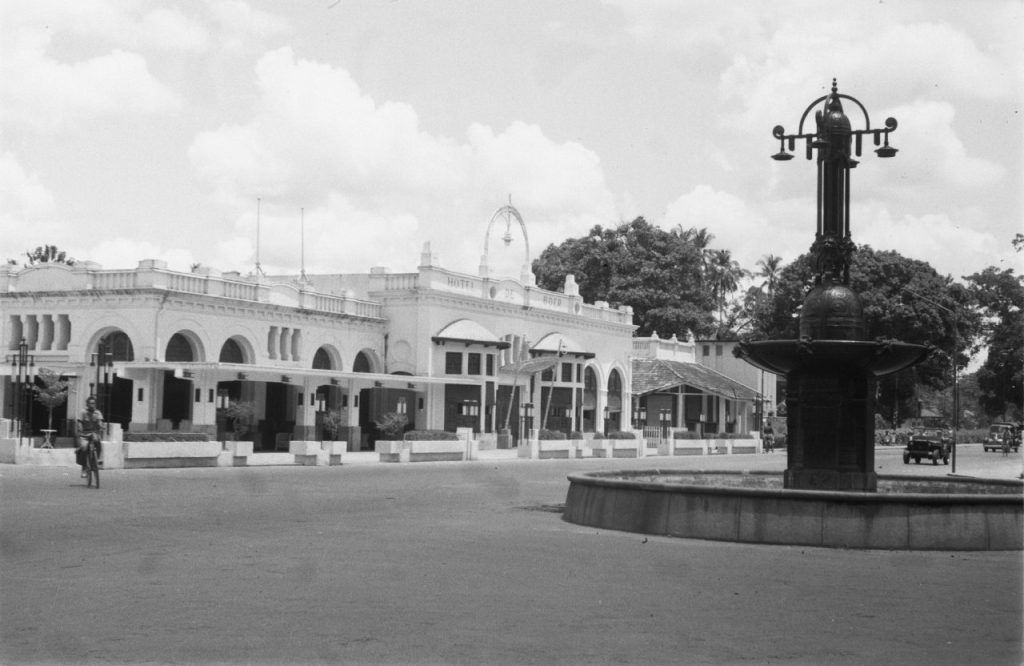
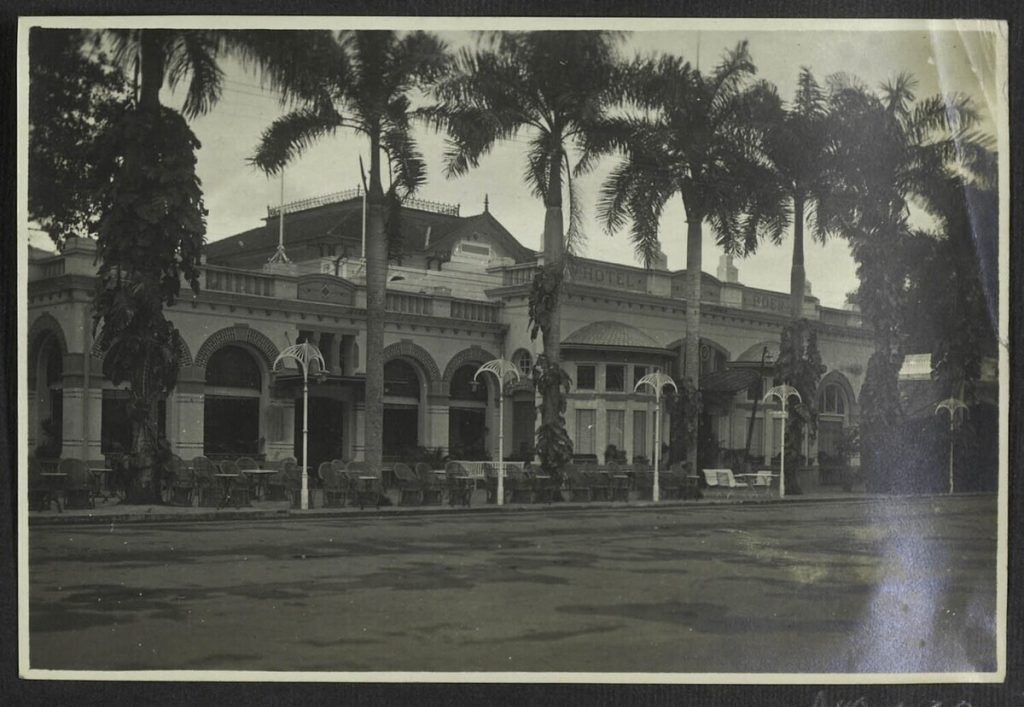
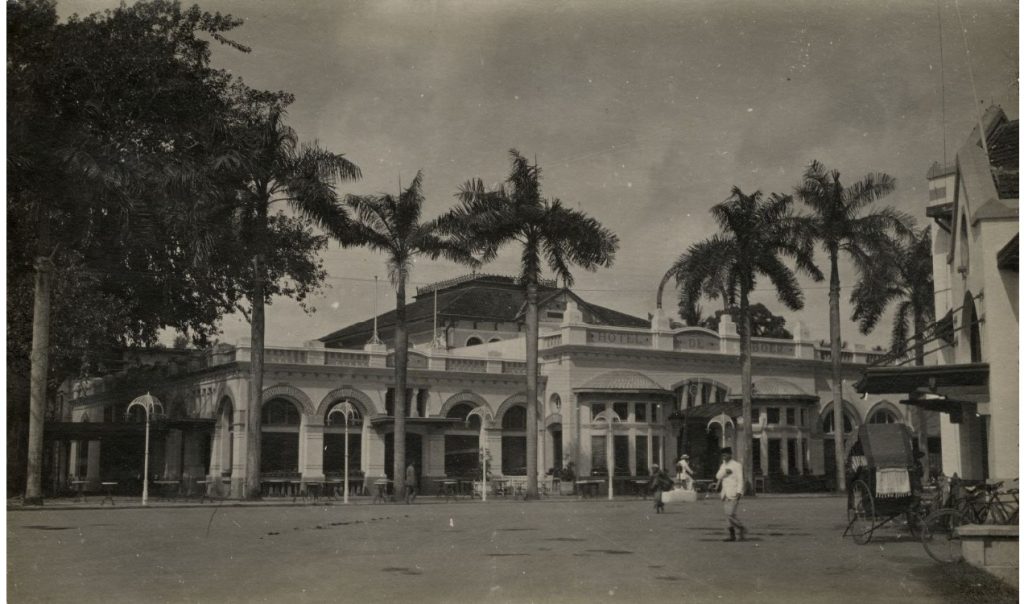
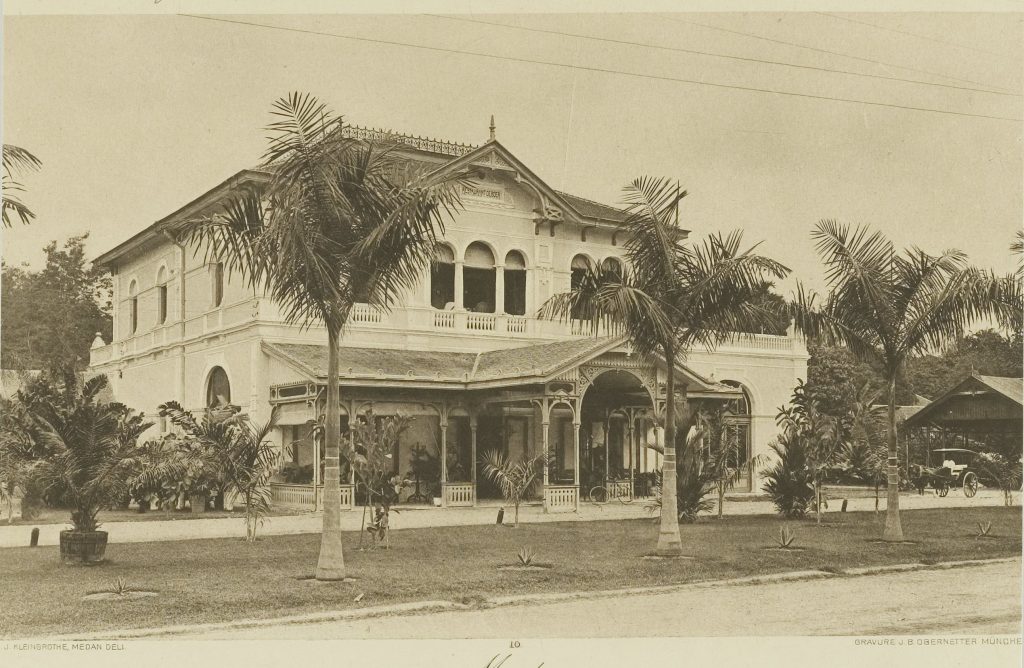
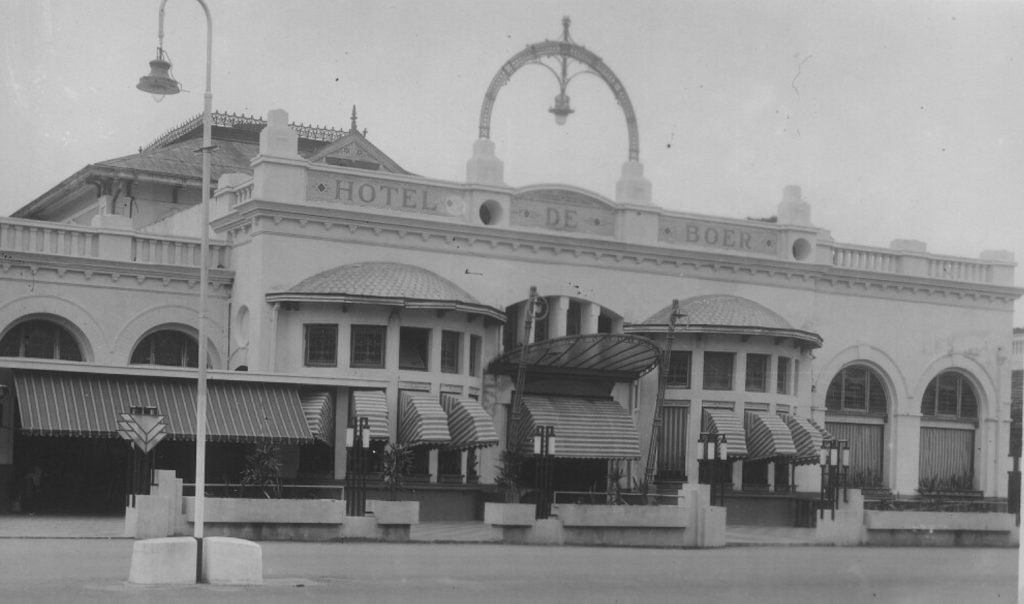
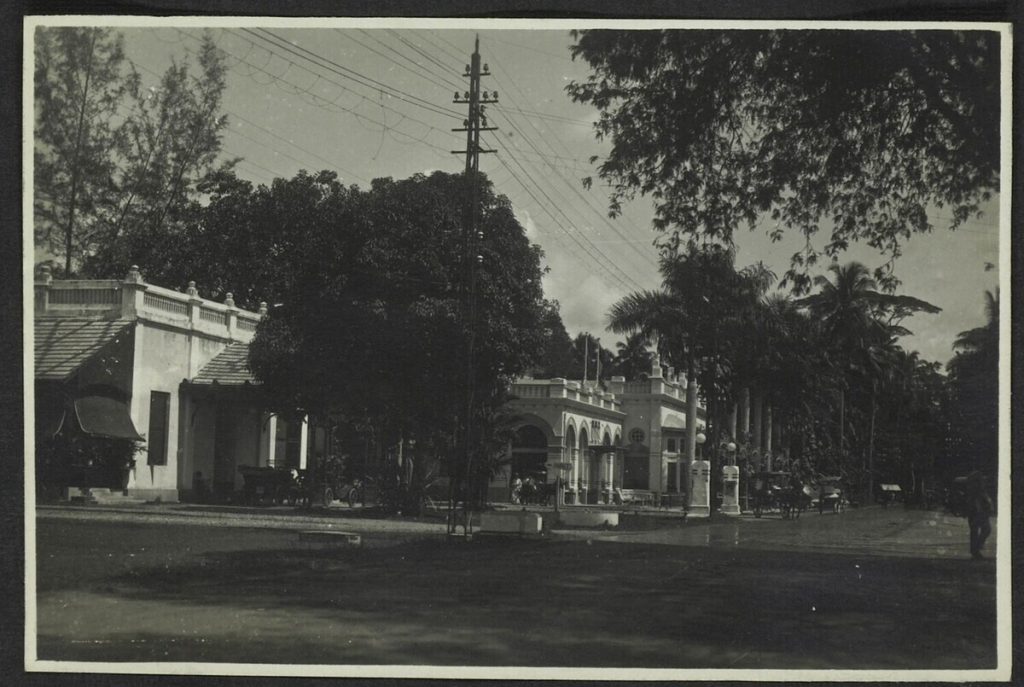
Hotel De Boer is a hotel that is currently called Grand Inna Medan. The hotel was started by a Dutch businessman named Aeint Herman de Boer who managed De Boer Restaurant in Medan since 1899. In addition, De Boer built a house with several bedrooms for rent (Huize De Boer). Herman de Boer previously owned a restaurant in Surabaya before deciding to move to Medan in early 1899. The hotel was first built with seven rooms, a restaurant and a bar. Over time, its popularity among the Dutch authorities increased, prompting the owner to expand the hotel to 40 rooms in 1909, then to 120 rooms, several halls, and a restaurant in 1930.
In developing his hotel business, Herman de Boer established the limited company NV. Hotel Maatschappij de Boer in 1909. During the Dutch colonial era and the development of the plantation industry, the hotel became one of the icons and meeting places for plantation entrepreneurs and practitioners in Medan. Hotel De Boer is a symbol of the modernity of the plantation economy in the early 20th century. Although it was not the first hotel to be established in Medan, it developed as a symbol of the modernity of the plantation city. The hotel introduced the ‘mosquito free room’ technology, rooms that are free from mosquitoes. This room model has thin wire windows that replace mosquito nets. This room model was the first to be applied to hotels in Southeast Asia at the time. The hotel was famous in the Dutch East Indies and was included in the book “Twentieth Century Impression of the Netherlands Indies” published in 1909 in Singapore. Various famous figures have stayed at this hotel, namely King Leopold II of Belgium, Prince Schaumburg-Lippe (Queen Wilhelmina’s nephew), and Mata Hari (International Spy). In fact, the figure of the Republic of Indonesia, Sutan Syahrir, once played violin in this hotel.
The hotel had a fire incident in 1935. Since then, Herman de Boer sold some of his shares and bought a residence in Bandar Baru, near Berastagi. In the same year, Hotel De Boer was sold by its owner. A number of the hotel’s original buildings have been remodeled and replaced with a new eight-story building, although the original section remains in use as the front hall and restaurant. The building’s main entrance still consists of a two-way door leaf, while the windows have been made larger and rectangular with aluminum frames lining the eastern wall. The upper part of the outer wall has ornate arches, seams and small columns, while in the center of the roof is a curved iron ornament that was used to hang lights and is associated with the now-closed main entrance.
The hotel’s renovation also changed the building’s characteristics, including the position of the entrance, door and window elements, and the addition of a Malay-style canopy. Originally, the building featured a Neo-Classical architectural style with a ground floor made of tiles and brick walls. The hotel stands on 3.5 hectares of land with a building area of 1200 m², 40 meters long, 30 meters wide and 4.5 meters high. In addition to the two-story main building, there is a new nine-story building and a two-story health spa and fitness center. At the back of the hotel, a mosque has also been added as an additional facility. On the first floor of the hotel, there are two restaurants, the Coffee Corner located at the front of the hotel, accessible from the main lobby, and the Deli Restaurant located in the main lobby in front of the main entrance.
Although it has undergone many renovations, Hotel De Boer’s main building still stands strong and functions as the hotel’s main lobby. The addition of a new nine-story building on the side also complements the modern look of the hotel.
The hotel has a significant historical value, being part of the development of Medan as a plantation industry city in North Sumatra. As the second hotel to be established in Medan after Medan Grand Hotel, Hotel De Boer reflects the growth of the accommodation sector which was important to the city. Many influential figures from abroad have stayed at this hotel, making it an international standard hotel in its time. Therefore, Medan Grand Inna Hotel holds important information about the history of the development of the hotel industry in Medan city, which is closely related to the plantation industry in Deli land.
The renovations of the hotel in 1930 kept its beautiful Neo-Classical elements and reinforced the character of the region. Its ‘mosquito-free room’ innovation is a testament to the technological advancements for guest comfort in Southeast Asia at the time. The old building has been kept in its original form, with some additions, such as a canopy at the entrance, changes in materials, colors, and room furnishings to keep up with modern standards. As one of the iconic buildings in the city of Medan, Grand Inna Medan Hotel is not only a place to stay but also a witness to the historical development of Medan from the colonial era to the present.
In 1937, Herman de Boer passed away and was buried in the European Cemetery in Medan. After Indonesia’s independence, the hotel was nationalized and renamed as Hotel Darma Bakti, then changed to Hotel Natour. In 2001, the name and management was changed to Hotel Inna Dharma Deli, and currently the name of the hotel is Grand Inna Medan.